
The Newscasters’ Insights
AI Demand Fuels Massive Expansion, Strains Resources
Murray Edwards
Across the United States, a surge in data center construction is transforming landscapes, power grids, and local economies. Driven largely by the explosive growth of artificial intelligence, nearly 3,000 new facilities are under construction or planned, adding to more than 4,000 already operational. This “onslaught,” as some locals describe it, promises to underpin America’s technological leadership but raises urgent questions about energy costs, environmental impacts, and community burdens.
Hotspots and Scale of Growth
Virginia has long dominated as “Data Center Alley,” with 663 operational facilities and hundreds more in the pipeline. Texas is surging ahead in new development, leading with around 140 under construction as of early 2026 and a massive pipeline that could soon make it the top hub overall. Other states seeing rapid growth include Georgia (with potential for a 176% increase), Ohio, Arizona, and emerging markets in the South and Midwest.
Most new projects target rural areas, over 1,500 facilities are in development nationwide and about two-thirds are heading into non-urban zones, particularly in the South and Midwest. This shift brings promised tax revenue and infrastructure investment to smaller communities but often sparks local debates over land use and resources.
Hyperscale operators like Amazon, Microsoft, Google, and Meta are pouring hundreds of billions into these projects. Investments from the big four alone are projected to exceed $350 billion in 2025 and $400 billion in 2026, fueling AI workloads that require ever-higher power densities.
The Energy Crunch and Rising Costs
Data centers use massive amounts of electricity. One large AI center can consume as much energy as 100,000 households, and experts predict that U.S. data centers could use 9-12% of the country’s total electricity by 2030—up from the current 4%. This rising demand is putting pressure on regional power grids, especially those in PJM (which includes Virginia and nearby states) and ERCOT in Texas.
Utility companies will face pressure to upgrade infrastructure, leading to rate hikes passed on to residents. Wholesale electricity prices have already spiked dramatically near major hubs, up to 267% in some areas since 2020, contributing to higher bills in at least 13 states.
In Virginia and parts of the Midwest, data center growth has been linked to monthly residential increases of $16 or more. Critics argue that without targeted policies, everyday consumers subsidize Big Tech’s expansion.
Water usage for cooling is another flashpoint, alongside noise from generators and backup systems. Some facilities are exploring advanced cooling and on-site generation, including nuclear and geothermal deals, but challenges persist.
Economic Trade-offs in Communities
Proponents highlight benefits: massive tax bases (e.g., Virginia counties seeing homeowner tax relief), temporary construction jobs, and support for AI-driven innovation that could boost GDP. Federal policies under the current administration emphasize accelerating permitting and using public lands to speed development.
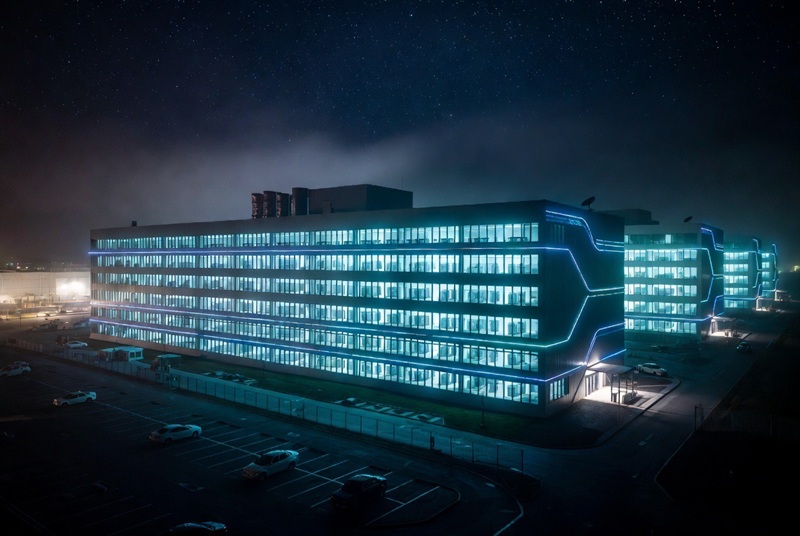
However, many projects deliver limited long-term local employment beyond construction, and rural towns grapple with grid upgrades, potential blackouts, and aesthetic changes from sprawling industrial buildings. Delays are common, nearly half of planned 2026 capacity faces setbacks due to transformer shortages, grid constraints, and supply chain issues from overseas.
Outlook and Debates
Analysts forecast continued strong growth, with U.S. data center capacity potentially doubling or more by 2030, though supply may lag hyperscale demand. Markets like Northern Virginia remain dominant, but power-rich areas in Texas, the Midwest, and Southeast are gaining traction.
Policymakers, utilities, and communities face tough choices: balancing AI competitiveness with affordability, reliability, and sustainability. Some states are exploring special rates for data centers or requiring more renewables and flexibility measures. Others debate incentives versus protections for residents.
As data centers continue to expand, it is increasingly evident that the infrastructure supporting the AI revolution has become highly visible. Across rural Alabama, Texas prairies, and Virginia suburbs, the physical presence and associated costs of these facilities are significantly impacting local communities.
The forthcoming challenge will be to assess whether the advantages provided to hosting areas will ultimately surpass the pressures placed upon them.