
Amanda Read Sheik – Unconventional
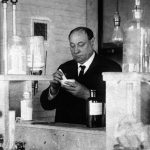
Next year will be the 120th anniversary of the passage of the 1906 Pure Food and Drug Act, the law that made the production and sale of adulterated and misbranded foods and drugs a federal crime. Nicknamed “The Wiley Act” for the USDA Chief Chemist who championed it, Dr. Harvey W. Wiley, the bill was immensely popular with the public. When we think of food and drug legislation with Theodore Roosevelt’s presidential signature on it, we probably think about practices instantly revolting to the senses: formaldehyde in milk, arsenic in candy, rat carcasses in ground beef, or any other such nastiness from the latter end of the industrial revolution. It would, after all, be hard to oppose regulation that condemned those extremes. But while enforcing the law, Dr. Wiley actually targeted a lot of the additives and adulteration we still see in our food today: sodium benzoate, copper sulfate, corn syrup, saccharin, and bleached flour. His renowned “Poison Squad” of volunteers spent years eating popular additives and preservatives in their food as a living experiment to determine the effects of this contaminated diet, and the results brought many Americans to Wiley’s cause.
So what went wrong? What happened that brought unhealthy additives back on the market, and led Wiley to resign in disgust within six years? Long story short, opponents of the legislation succeeded in deftly using bureaucracy to complicate its enforcement until it lost most of its teeth. “Interest after interest, engaged in what the Bureau of Chemistry found to be the manufacture of misbranded or adulterated foods and drugs, made an appeal to escape appearing in court to defend their practices,” Wiley said in his resignation letter. “Various methods were employed to secure this end, many of which were successful.”
“If the Bureau of Chemistry had been permitted to enforce the law as it was written and as it tried to do, what would have been the condition, now?” Wiley queried at the end of his book, The History Of A Crime Against The Pure Food Law.
“No food product in our country would have any trace of benzoie acid, sulphurous acid or sulphites, or any alum or saccharin, save for medicinal purposes. No soft drink would contain any caffein, [sic] or theobromine. No bleached flour would enter interstate commerce. Our foods and drugs would be wholly without any form of adulteration and misbranding. The health of our people would be vastly improved and their life greatly extended. The manufacturers of our food supply, and especially the millers, would devote their energies to improving the public health and promoting happiness in every home by the production of whole ground, unbolted cereal flours and meals. The resistance of our people to infectious diseases would be greatly increased by a vastly improved and more wholesome diet. Our example would be followed by the civilized world and thus bring to the whole universe the benefits which our own people had received. We would have been spared the ignominy and disgrace of great scientific men bending their efforts to defeat the purpose of one of the greatest laws ever enacted for the protection of the public welfare. Eminent officials of our Government would have escaped the indignation of outraged public opinion because they permitted and encouraged these frauds on the public. The cause of a wholesome diet would not have been put back for fifty or a hundred years.”
Since then, scientific innovation has continued to improved healthcare astoundingly, but has also developed more insidious ways to poison consumers. Not until President Donald Trump’s second administration have we seen major progress in restoring order to the wild west of American food and pharma.
The Crusading Chemist would likely be thrilled with Secretary Robert F. Kennedy, Jr.’s priorities. Within Wiley’s lengthy reflections on the destruction of his life’s work, I have found a few key takeaways that are advisable for leaders of the Make America Healthy Again generation.
#1. Explain why healthier food is in the best interests of the producer as well as the consumer.
In his role as USDA Chief Chemist, Wiley was a scientist first and politician second, but he was a capitalist Republican through and through. Indiana-born and raised, he was fluent in the language of the Midwestern farmer and manufacturer as much as he was in the language of the laboratory. Multiple times throughout his pure food advocacy, Wiley demonstrated that his agenda was not to punish American business, but to improve it. Once he spoke at a convention of canned goods manufacturers who were initially so hostile towards him that he was told to back out of the speaking engagement for his own safety. Convinced that he had their best interests at heart, he showed up anyway, and put his message in these terms: “Is there a man in this audience who would put his hand in his neighbor’s pocket, take a dollar from it and put it in his own pocket? Is there a man in this audience who would so adulterate, so degrade and so misbrand a package of his goods as to cheat the consumer out of a dollar of his money when he bought that package? If so, hold up your hand.” No hands went up, and the audience actually broke into applause. To use fillers and additives that inflate and distort the actual food, add no nutritional value, and are harmful is to essentially scam the buyer. With no ethical standard, the honest workers lose while the frauds win. This concept resonated.
After the 1906 law was enacted, an Indiana ketchup manufacturer personally came to Wiley’s office in tears, believing his industry would collapse if the preservative sodium benzoate was banned from food products. Wiley rose to the challenge again, this time putting real money on the line: at the bureau’s expense, the ketchup man would bottle a batch of pure ketchup with no additives apart from the seasoning in the classic recipe, and see how it fared. The businessman was nervous about this experiment at first but ecstatic with the results. Not only did the pure ketchup not spoil on the shelf, but customers liked it better than his usual batches and requested more. When Wiley asked how his business was going, the manufacturer told him “I have abandoned forever the use of benzoate of soda. The crop which I have just manufactured does not contain a particle of it.”
“Would you like to have the law changed so you could go back and use this chemical?” Wiley asked. “Neither the law nor money could drive me back to its use again,” the businessman replied.
#2. Don’t needlessly offend and scare people.
In one of Wiley’s most regrettable anecdotes, he lost the valuable support of President Theodore Roosevelt by speaking out of turn at the cabinet table. Roosevelt was a New York Republican of enormous personality and stamina who governed with heft. He was passionate about American vitality for sure and had no qualms about upsetting establishments, but woe to any who made him feel undermined (sound familiar?). During a meeting involving the Secretary of Agriculture and representatives of multiple companies who disputed the pure food regulations, someone claimed his firm had saved money by sweetening corn with saccharin instead of sugar, and wanted the president to decide if saccharin should still be outlawed.
“Yes, Mr. President, and everyone who ate that corn was deceived,” Wiley interjected. “He thought he was eating sugar, when in point of fact he was eating a coal tar product totally devoid of food value and extremely dangerous to health.”
What Wiley didn’t know was that the president’s physician was giving him saccharin daily. Trusting his personal doctor more than the USDA chief chemist, Roosevelt angrily retorted that “anybody who says saccharin is injurious to health is an idiot!” Then he promptly appointed saccharin co-developer Ira Remsen to a “referee board” that could overturn Wiley’s regulatory decisions. Ever since that turning point, Wiley wondered if things might have turned out differently had he waited for the president to ask what science revealed about saccharin. Tact matters!
#3. Maintain priorities.
Wiley also hurt his cause when he got nit-picky about things like paintings of grapes decorating the packages of imported vinegar that wasn’t made from grapes, and Coca-Cola retaining its brand name despite eliminating actual coca and cola from its recipe. The adage about not making “the perfect the enemy of the good” is a necessary one to make any progress in politics. “The cause of truth is never hurt by unjust attacks and its citadel never reached by the devious ways of unworthy foes,” Wiley said in his testimony during the final hearings before the Committee on Interstate and Foreign Commerce (February 13, 1906). “[B]ut it is sometimes weakened by the unguided enthusiasms of its defenders.”
Tactfulness and prioritization are important. We shouldn’t create a greater challenge for ourselves than we already have!
#4. Citizens united in awareness are the biggest guns in the arsenal.
Wiley dedicated the remainder of his life to educating the public on health and nutrition, and he credited a lot of women activists and investigative journalists to the initial success of the pure food and drug act. He eventually married suffragette and consumer activist Anna Kelton, who had a similar mind for science and politics. Market demand for healthier products certainly helps change course, possibly faster than legislation in most cases.
“I propose to devote the remainder of my life, with such ability as I have at my command and with such opportunities as may arise, to the promotion of the principles of civic righteousness and industrial integrity which underlie the food and drugs act, in the hope that it may be administered in the interest of the people at large, instead of that of a comparatively few mercenary manufacturers and dealers,” Wiley wrote in his resignation letter.
“This hope is heightened by my belief that a great majority of manufacturers and dealers in foods and drugs are heartily in sympathy with the views I have held, and that these views are endorsed by an overwhelming majority of the press and of the citizens of the country.”
Seeing that quite a few manufacturers and restaurants have been racing to impress the public by making changes before legislation requires them to do so, Wiley’s belief might not be too fanciful.

